
"Yes... We Asked Students to Talk to Trees."
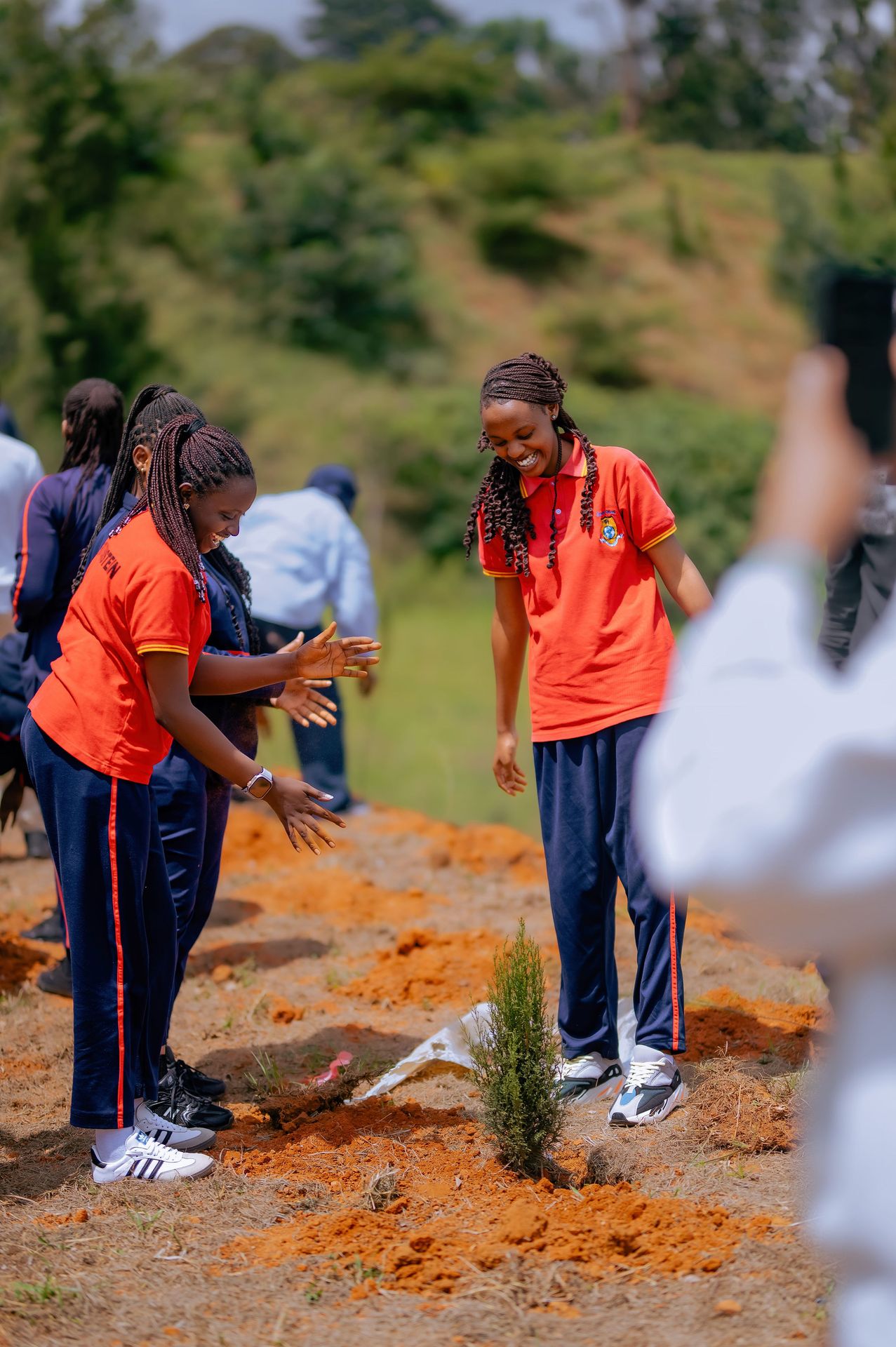
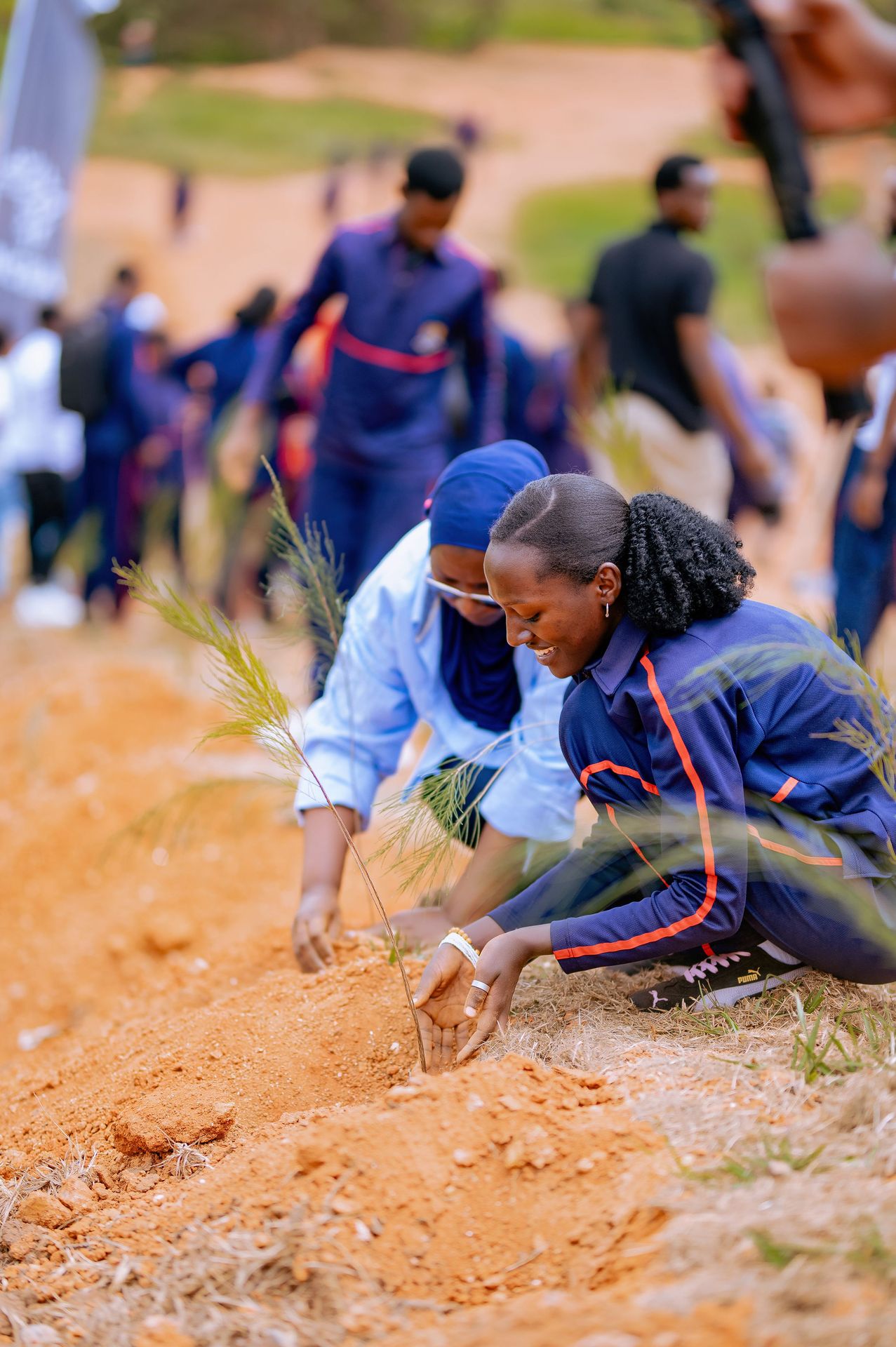
Imagine walking into Excella High School on World Environment Day and seeing more than one hundred final-year students talking to trees.
"Grow high!"
"Don't disappoint us!"
"Bring hope!"
Some students even gave their trees names.
"Chelsea!"
"Real Madrid!"
"Arsenal!"
"Vanilla!"
"Hope!"
If you had arrived without knowing what was happening, you might have thought the students were preparing for a football tournament—or inventing nicknames for their classmates.
Instead, they were giving names and encouragement to the young trees they had just planted.
The school garden echoed with laughter, cheers, and good wishes. It was one of the happiest moments of the day.
But behind the laughter was an important lesson.
Those seedlings were no longer "just trees." They had become something personal. The students had already started caring about them.
That simple moment reflects an important truth about environmental protection: people are far more likely to protect what they feel connected to.
Perhaps climate action does not always begin with a government policy or a scientific breakthrough.
Sometimes, it begins with a student smiling at a tiny tree and saying,
"Grow high."
More Than a Tree-Planting Event

On 5 June 2026, GreenStarz Impakt Hub proudly partnered with NCBA Bank Rwanda and Excella High School to celebrate World Environment Day through a tree-planting and climate awareness campaign in Kigali.
The event brought together more than 100 final-year secondary school students, teachers, school leaders, representatives from NCBA Bank Rwanda, and the GreenStarz team around one common purpose: preparing young people to become responsible environmental leaders.
The activity was part of NCBA Bank Rwanda's "Change the Story" initiative, which aims to plant 10,000 trees every year as part of the Bank's commitment to building a greener future.
For GreenStarz Impakt Hub, however, the day was never only about planting trees.
It was about planting knowledge.
Because every tree we plant today needs someone who understands why it should still be standing tomorrow.
Planting Knowledge Before Planting Forests

Climate change is no longer a distant challenge. It is already affecting communities around the world through stronger heatwaves, heavier rainfall, longer droughts, food insecurity, and the loss of biodiversity.
According to the Intergovernmental Panel on Climate Change (IPCC), the Earth's average temperature has already increased by approximately 1.1°C because of human activities. Although this number may seem small, scientists agree that every additional fraction of a degree increases the risks facing both people and nature.
Trees are among our greatest allies in responding to these challenges. They absorb carbon dioxide, cool our cities, improve air quality, protect soils, regulate water cycles, and provide habitats for countless species. The Food and Agriculture Organization (FAO) estimates that forests store approximately 662 billion tonnes of carbon, making them one of the world's most important natural climate solutions.
Yet GreenStarz Impakt Hub believes that planting trees alone is not enough.
Protecting our environment begins by helping people understand it.
That is why climate education is at the heart of our work.
Throughout the day, students explored the science behind climate change, discussed practical environmental solutions, and reflected on the role they can play in protecting Rwanda's natural resources.
One message stood out clearly:
The best classrooms sometimes have no roof.

That day, the school garden became a classroom where every seedling represented a lesson in responsibility, sustainability, and hope.
By naming their trees and encouraging them to "grow high," the students demonstrated something remarkable. Without being instructed to do so, they created an emotional connection with nature.
Research shows that this sense of connection is one of the strongest predictors of long-term environmental stewardship. People are more likely to protect what they know, what they value, and what they feel connected to.
This is the future GreenStarz Impakt Hub works to build—a future where young people are not simply aware of climate change, but equipped to become researchers, innovators, entrepreneurs, policymakers, and community leaders who develop solutions for a more resilient world.
Growing Trees. Growing Futures.

Climate change cannot be solved by one organization alone.
It requires partnerships between schools, communities, businesses, governments, and young people.
The collaboration between GreenStarz Impakt Hub and NCBA Bank Rwanda demonstrates how meaningful partnerships can transform a simple tree-planting activity into a lasting learning experience.
Together, we are not only planting trees.
We are growing future climate leaders.
As the students of Excella High School now sit for their National Examinations, we would like to wish each one of them every success.
The same patience, commitment, curiosity, and teamwork you demonstrated while planting those trees will also guide you through your examinations and the exciting journey ahead.
One day, you may return to your school as doctors, engineers, teachers, entrepreneurs, researchers, or leaders.
Perhaps you will walk through the school garden, stop beneath a tall tree, smile, and remember:
"I planted that one."
Maybe it was called Chelsea.
Maybe Real Madrid.
Maybe Arsenal.
Maybe Vanilla.
Or perhaps...
Hope.
Whatever its name, that tree will continue growing—just as we hope you will.

From all of us at GreenStarz Impakt Hub, together with our valued sponsor NCBA Bank Rwanda, we wish the Excella School Class of 2026 confidence, success, and bright futures.
Good luck in your National Examinations.
Keep learning.
Keep growing.
And wherever life takes you, never stop talking to your tree.
References
Intergovernmental Panel on Climate Change (IPCC). Climate Change 2023: Synthesis Report.
Food and Agriculture Organization (FAO). Global Forest Resources Assessment.
World Meteorological Organization (WMO). Global Annual to Decadal Climate Update (2026–2030).